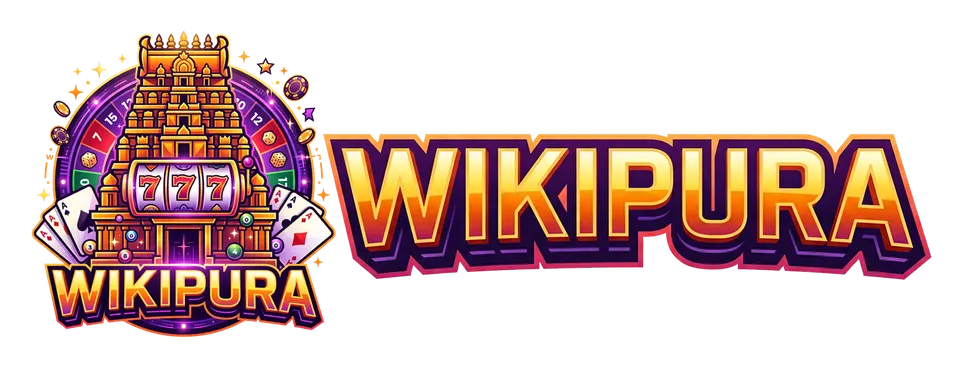
Mahjong Ways 2 Slot Game: Golden Tiles, Wilds & Free Spins
Explore Mahjong Ways 2 by PG Soft, featuring traditional Mahjong tiles, 2,000 winning ways, Golden Symbol transformations, Wilds and Free Spins. Discover its distinctive reel layout, multiplier system and differences from the original Mahjong Ways.
In this article
- What Is Mahjong Ways 2?
- Mahjong Ways 2 Game Information
- The Visual Theme of Mahjong Ways 2
- Why Mahjong Ways 2 Has an Unusual Reel Layout
- What Does 2,000 Ways Mean in Mahjong Ways 2?
- Mahjong Ways 2 Symbols Explained
- Bamboo Tiles
- Circle Tiles
- Character Tiles
- Gold-Plated Tiles
- Wild Symbol
- Scatter Symbol
- What Are Gold-Plated Symbols?
- How Do Golden Mahjong Tiles Turn Into Wilds?
- Example: A Golden Tile Becoming Wild
- The Cascading Symbol Mechanic
- What Happens to the Multiplier During Cascades?
- Example: Understanding the Multiplier Progression
- What Is the Free Spins Feature?
- What Makes Free Spins Different From the Normal Game?
- Why Does the Third Reel Turn Gold?
- Free Spins Multipliers Explained
- Can Mahjong Ways 2 Free Spins Retrigger?
- Mahjong Ways vs Mahjong Ways 2: What Changed?
- Reel Structure
- Winning Ways
- Free Spins
- Golden Symbols
- Visual Design
- Mahjong Ways 2 vs Super Ace
- Mahjong Ways 2 vs Fortune Tiger
- Is Mahjong Ways 2 Available on Mobile?
- What Is the RTP of Mahjong Ways 2?
- What Does the Advertised 100,000× Maximum Mean?
- Can Previous Mahjong Ways 2 Results Predict the Next One?
- What Makes Mahjong Ways 2 Distinctive?
- Frequently Asked Questions About Mahjong Ways 2
- What is Mahjong Ways 2?
- Who developed Mahjong Ways 2?
- Is Mahjong Ways 2 the same as traditional Mahjong?
- How many reels are in Mahjong Ways 2?
- Why does Mahjong Ways 2 have 2,000 ways?
- What are Golden Symbols in Mahjong Ways 2?
- Which reels can show Gold-Plated Symbols?
- What does the Wild symbol do?
- Does Mahjong Ways 2 have cascading reels?
- What are the normal-game multipliers?
- How many Free Spins can be awarded?
- What happens to the third reel during Free Spins?
- What are the Free Spins multiplier values?
- Can the Free Spins feature retrigger?
- What is the theoretical RTP of Mahjong Ways 2?
- Is Mahjong Ways 2 available on Android?
- Is Mahjong Ways 2 specifically an Indian game?
- Can Mahjong Ways 2 results be predicted?
- Explore More Slot Games on Wikipura
- Final Thoughts
Mahjong Ways 2 is a Mahjong-themed video slot developed by PG Soft, combining traditional tile artwork with Golden Symbols, Wild transformations, cascading reels and a special Free Spins feature.
Unlike slot games built around fruit symbols, playing cards or cartoon animals, Mahjong Ways 2 uses tiles inspired by the traditional Chinese game of Mahjong. Its screen features bamboo patterns, circular tile designs, Chinese characters, golden ingots and elaborate red-and-gold decorations.
The game also has an unusual reel arrangement. It uses five reels, but the three middle reels contain more visible symbol positions than the two outer reels.
This arrangement creates 2,000 possible ways to form qualifying combinations under the game's rules.
For readers in India who have seen Mahjong Ways 2 in a mobile gaming catalogue, this article explores the actual game, including its artwork, reel structure, Golden Symbol feature, Wild transformations, multipliers, Free Spins and differences from the original Mahjong Ways.
What Is Mahjong Ways 2?
Mahjong Ways 2 is the sequel to Mahjong Ways, a video slot developed by Pocket Games Soft, better known as PG Soft.
The original Mahjong Ways introduced a slot-game interpretation of traditional Mahjong tile imagery.
Mahjong Ways 2 expands that concept with additional symbol positions, a larger number of winning ways and an enhanced Free Spins feature.
The game is not a traditional four-player Mahjong match.
Players do not build hands or discard tiles according to ordinary Mahjong rules.
Instead, Mahjong-inspired tiles appear as symbols on digital reels.
The game evaluates those symbols according to its own reel-based rules.
This distinction matters because the name "Mahjong" describes the visual inspiration, not the use of traditional Mahjong strategy.
Mahjong Ways 2 Game Information
Here are the principal specifications published by PG Soft.
Developer: PG Soft (Pocket Games Soft)
Game title: Mahjong Ways 2
Original launch: 2020
Game format: Video slot
Reels: Five
Visible rows: Four on Reels 1 and 5, five on Reels 2, 3 and 4
Winning system: 2,000 ways
Special symbols: Wild, Scatter and Gold-Plated Mahjong Symbols
Main features: Cascading symbols, Wild transformations, increasing multipliers and Free Spins
Theoretical RTP: 96.95%
Listed session volatility: Medium
Advertised maximum win: 100,000× the applicable stake
Supported platforms: Android, iOS, HTML5, Windows and macOS
These figures describe the version documented by PG Soft. They are not guarantees about the results of an individual game session.
The Visual Theme of Mahjong Ways 2
Mahjong Ways 2 takes inspiration from traditional Chinese Mahjong tiles.
The background uses green, red and gold colours, combined with decorative motifs associated with the game's cultural theme.
The main interface is dominated by rectangular tiles arranged vertically.
Some tiles contain bamboo-like markings.
Others contain coloured circles or Chinese characters.
Gold-Plated versions of eligible symbols can appear during the game.
These symbols stand out because their background becomes golden instead of the normal pale tile colour.
Above the reels, a horizontal multiplier display shows the current multiplier level.
The interface therefore has several recognisable features:
- Mahjong tiles instead of fruit or card symbols.
- Five vertical reels with an uneven number of visible rows.
- Gold-Plated tiles.
- Golden ingot Wild symbols.
- A multiplier strip above the reels.
- Red-and-gold effects during special features.
Together, these details make Mahjong Ways 2 visually distinct from many other mobile slot titles.
Why Mahjong Ways 2 Has an Unusual Reel Layout
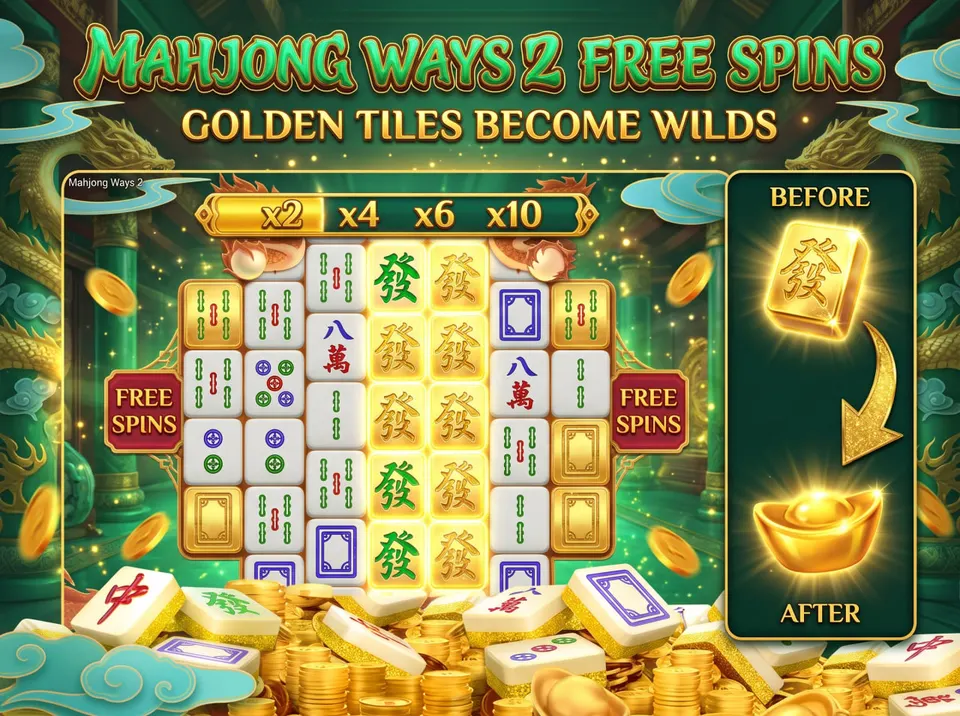
One of the most interesting differences between Mahjong Ways 2 and ordinary five-reel slots is the shape of the visible grid.
A common five-reel design might show three or four symbols on every reel.
Mahjong Ways 2 does not use an identical number of visible positions across all five reels.
Instead, it uses:
Reel 1: Four visible symbols.
Reel 2: Five visible symbols.
Reel 3: Five visible symbols.
Reel 4: Five visible symbols.
Reel 5: Four visible symbols.
This creates a wider central section in the symbol arrangement.
The three middle reels extend beyond the outer reels.
That is why screenshots of Mahjong Ways 2 often show a taller group of tiles in the middle.
The shape is not merely decorative.
It also determines the game's number of possible winning ways.
What Does 2,000 Ways Mean in Mahjong Ways 2?
The game's reel arrangement produces 2,000 possible symbol-position routes.
The calculation is straightforward:
4 × 5 × 5 × 5 × 4 = 2,000.
Each factor represents the number of visible positions on one reel.
However, this calculation does not mean every position route produces a qualifying result.
For a combination to qualify, its symbols must satisfy the game's rules.
The 2,000 figure describes possible routes through the visible positions.
It is not the number of prizes guaranteed during a spin.
This structure also makes Mahjong Ways 2 different from the first Mahjong Ways game, which uses a different reel arrangement.
Mahjong Ways 2 Symbols Explained
Mahjong Ways 2 uses several types of symbols inspired by traditional Mahjong tile designs.
The most recognisable are bamboo markings, coloured circles and character tiles.
Other symbols have special mechanical roles.
Bamboo Tiles
Some symbols show narrow bamboo-like markings arranged in vertical patterns.
Their design makes them easy to recognise among the other tiles.
These are regular symbols evaluated according to the game's paytable.
Circle Tiles
Other symbols display groups of coloured circles.
The circles appear in different arrangements and colours, providing another recognisable symbol family.
Their value depends on the actual combination and paytable.
Character Tiles
Character tiles display Chinese writing.
These tiles are among the most visually distinctive elements of Mahjong Ways 2.
They help preserve the game's traditional Mahjong-inspired appearance.
Gold-Plated Tiles
Certain eligible symbols can appear with a golden background.
These are important because they can transform into Wild symbols when the feature's conditions are met.
Wild Symbol
The Wild is represented through golden-themed artwork, including a gold ingot.
It can substitute for eligible regular symbols according to the game rules.
It does not substitute for the Scatter symbol.
Scatter Symbol
The Scatter is associated with activating the Free Spins feature.
Unlike an ordinary matching tile, it follows the game's special trigger rules.
What Are Gold-Plated Symbols?
Gold-Plated Symbols are one of Mahjong Ways 2's most recognisable features.
During the main game, eligible regular symbols on Reels 2, 3 and 4 can appear with a golden background.
This gives them a different appearance from the ordinary tiles.
For example, a normal character tile might have a pale background.
The Gold-Plated version of that symbol has a bright golden background.
But the difference is not purely cosmetic.
A Gold-Plated tile can transform into a Wild when it satisfies the game's special conditions.
This transformation is a major part of how Mahjong Ways 2 combines its tile theme with changing symbol combinations.
How Do Golden Mahjong Tiles Turn Into Wilds?
PG Soft describes a specific Wild transformation mechanic for Gold-Plated Symbols.
During the main game, selected regular symbols on the three middle reels may appear in gold.
When an eligible Gold-Plated Symbol participates in a qualifying combination, it can transform into a Wild in the following stage of the sequence.
This means the symbol changes its role.
Before the transformation, it represents its original regular tile.
After the transformation, it functions as a Wild under the game's rules.
The key detail is that Gold-Plated Symbols do not automatically become Wilds simply because they are visible.
The transformation depends on the defined conditions.
This is why Golden Symbols should be interpreted separately from ordinary tiles and Wild symbols already present on the screen.
Example: A Golden Tile Becoming Wild
Consider a fictional Mahjong Ways 2-style sequence.
Suppose a Gold-Plated bamboo tile appears on the third reel.
During the current evaluation, that tile participates in a qualifying combination.
The winning symbols are processed according to the game's elimination and replacement rules.
At the relevant following stage, the eligible Golden tile transforms into a Wild.
The Wild can then affect how the updated grid is evaluated.
This creates a two-stage relationship:
Stage 1: The Golden tile participates in a qualifying result.
Stage 2: The Golden tile becomes a Wild during the subsequent evaluation process.
This is a simplified educational illustration, not an actual recorded result.
The important idea is that the Gold-Plated tile can change function as the game progresses.
The Cascading Symbol Mechanic
Mahjong Ways 2 also uses a cascading symbol system.
This means a completed symbol arrangement can lead to additional evaluations within the same initial activation.
When a qualifying combination appears, the game processes the relevant symbols.
The resulting spaces can be filled by other symbols moving into position.
The updated grid is then evaluated again.
If it produces another qualifying combination, another stage may occur.
This gives Mahjong Ways 2 a distinctive visual rhythm.
The screen does not always remain static after the first qualifying combination.
Instead, several symbol arrangements may appear before the sequence finishes.
However, every cascade is not necessarily a separate paid spin.
It is important to distinguish the initial game activation from the additional evaluations that occur during its cascading sequence.
What Happens to the Multiplier During Cascades?
Above the reels, Mahjong Ways 2 displays a multiplier progression.
In the normal game, PG Soft documents these levels:
1× → 2× → 3× → 5×
The first qualifying stage uses the initial multiplier level.
If further qualifying combinations occur during the cascade sequence, the multiplier increases according to the game's rules.
The final stage can use a higher multiplier than the first.
This means different stages of one sequence may use different multiplier values.
However, the multiplier does not increase without limit.
The documented normal-game progression ends at 5×.
Understanding that progression is useful because the multiplier strip is a visible part of the game screen.
It helps identify which level is being applied during an ongoing sequence.
Example: Understanding the Multiplier Progression
Imagine a fictional sequence containing four qualifying stages.
The example uses invented points purely to demonstrate multiplication.
In the first stage, a base amount of two points receives a 1× multiplier.
2 × 1 = 2 points.
In the second stage, another base amount of two points receives a 2× multiplier.
2 × 2 = 4 points.
In the third stage, a base amount of three points receives a 3× multiplier.
3 × 3 = 9 points.
In the fourth stage, a base amount of one point receives a 5× multiplier.
1 × 5 = 5 points.
The combined illustrated amount is:
2 + 4 + 9 + 5 = 20 points.
This example shows how multiplier progression changes a calculation.
It does not represent a real Mahjong Ways 2 result or establish how frequently several consecutive stages occur.
What Is the Free Spins Feature?
Mahjong Ways 2 includes a Free Spins feature activated by Scatter symbols.
According to PG Soft's game information, three Scatter symbols appearing anywhere in the same qualifying result award ten Free Spins.
Additional Scatter symbols can increase the awarded number of spins.
Each additional qualifying Scatter adds two Free Spins.
This makes Scatter symbols an important part of the game's special-feature system.
However, the presence of one Scatter does not automatically activate the feature.
The minimum trigger requirement must be met.
The feature uses the same general Mahjong tile identity as the normal game but introduces changes to Golden Symbols and multiplier levels.
What Makes Free Spins Different From the Normal Game?
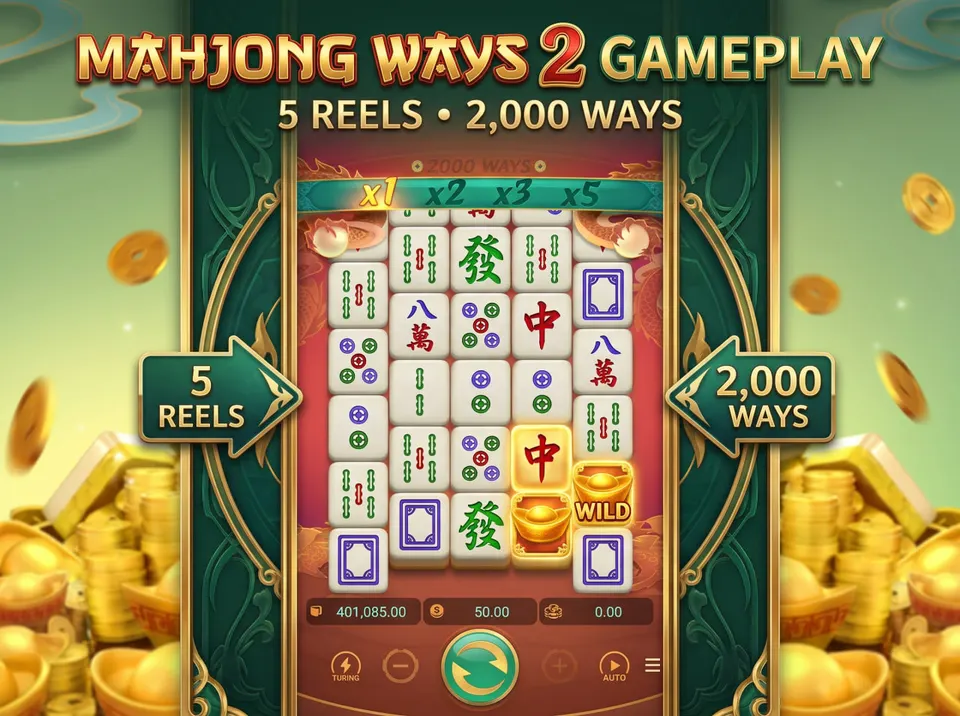
The Free Spins feature is not simply a repeat of the ordinary reels.
PG Soft identifies two important differences.
First, eligible regular symbols on Reel 3 appear as Gold-Plated Symbols during the feature.
Second, the multiplier progression is increased.
These changes make the middle reel especially prominent during the Free Spins sequence.
They also change the appearance of the grid.
Instead of seeing occasional Gold-Plated Symbols across eligible positions, the third reel receives a more prominent golden treatment.
Wild and Scatter symbols remain separate from the regular symbols affected by this rule.
This is one reason Mahjong Ways 2 has a recognisable Free Spins screen.
Why Does the Third Reel Turn Gold?
During the Free Spins feature, PG Soft specifies that regular eligible symbols on Reel 3 appear in gold.
Reel 3 is the central reel of the five-reel arrangement.
Highlighting this reel makes the middle of the game screen visually distinctive.
It also connects the Free Spins feature to the game's Gold-Plated Symbol transformation mechanic.
When the relevant Golden Symbols participate in qualifying combinations, they may transform into Wilds according to the game's rules.
This arrangement is different from simply awarding more spins while keeping every symbol unchanged.
It gives the feature a specific visual and mechanical identity.
Free Spins Multipliers Explained
The normal game uses the progression:
1× → 2× → 3× → 5×
During Free Spins, the multiplier levels are doubled:
2× → 4× → 6× → 10×
This is one of the major differences between the two modes.
For example, a corresponding multiplier level that would be 3× in the normal game becomes 6× during Free Spins.
However, the larger multiplier does not mean every Free Spin produces a qualifying result.
The actual calculation still depends on the combination formed and the applicable feature rules.
The multipliers describe how eligible results are evaluated, not what result must occur next.
Can Mahjong Ways 2 Free Spins Retrigger?
Yes. PG Soft's documentation states that the Free Spins feature can be retriggered.
A retrigger means that additional qualifying Scatter symbols can award extra spins while the feature is active.
The number of remaining Free Spins can therefore increase if the relevant condition is met.
This is different from starting an entirely unrelated game mode.
The additional spins extend the current feature according to the game's rules.
A screenshot showing a rising Free Spins counter should therefore be read in the context of the feature's trigger conditions.
It does not mean that the counter increases automatically after a fixed number of spins.
Mahjong Ways vs Mahjong Ways 2: What Changed?
Mahjong Ways 2 is a sequel, but it retains the original game's Mahjong tile identity.
Both titles use traditional tile artwork, Wild transformations and increasing multipliers.
The second game introduces several important differences.
Reel Structure
The original Mahjong Ways uses a more uniform visible arrangement.
Mahjong Ways 2 adds an extra visible row to each of Reels 2, 3 and 4.
This creates the sequel's characteristic 4–5–5–5–4 layout.
Winning Ways
The extra symbol positions increase the number of possible routes through the reels.
Mahjong Ways 2 uses 2,000 ways.
Free Spins
The original Mahjong Ways awards twelve Free Spins when its basic Scatter condition is met.
Mahjong Ways 2 awards ten Free Spins under its corresponding basic trigger condition.
Both games have rules for additional qualifying Scatters.
Golden Symbols
Mahjong Ways 2 makes the central Gold-Plated Symbol arrangement a particularly important part of its Free Spins feature.
Visual Design
The sequel retains the traditional tile theme while presenting an expanded reel screen and enhanced feature effects.
These differences make Mahjong Ways 2 a separate product rather than an identical copy of the original.
Mahjong Ways 2 vs Super Ace
Mahjong Ways 2 and Super Ace have one interesting similarity: both involve symbols that can transform into Wilds.
However, their artwork and feature structures are different.
Super Ace is developed by JILI and uses playing-card symbols.
Mahjong Ways 2 is developed by PG Soft and uses Mahjong tiles.
Super Ace has a five-reel, four-row card layout and Golden Card transformation mechanics.
Mahjong Ways 2 uses an uneven five-reel arrangement and Gold-Plated Mahjong tile transformations.
Their multiplier systems and Free Spins rules are also defined separately.
The games therefore share a broad concept of transforming special symbols without using identical rules.
That is why it is important to identify the exact game title rather than assuming every Golden Symbol mechanic works in the same way.
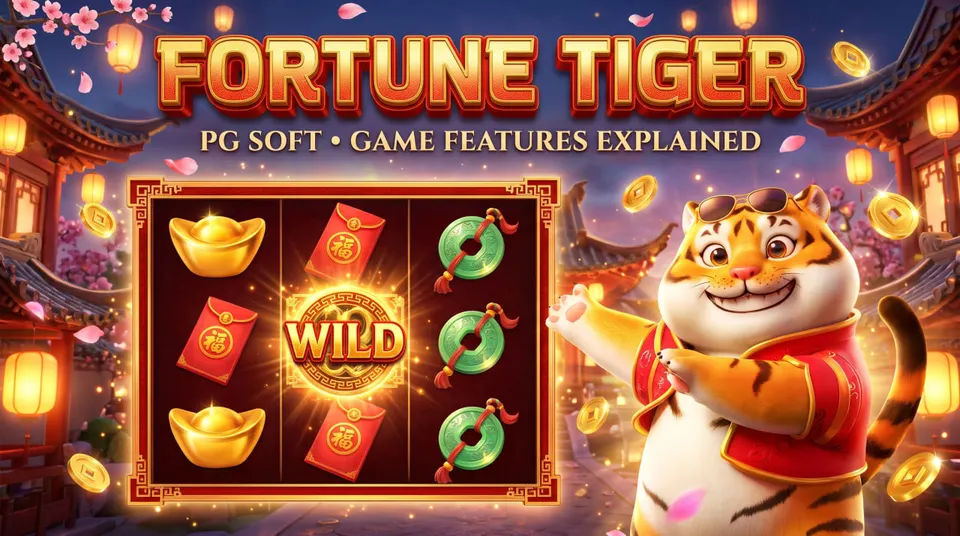
Mahjong Ways 2 vs Fortune Tiger
Fortune Tiger is another PG Soft title, but it uses a very different design.
Fortune Tiger features a cheerful golden tiger and a compact three-reel layout.
Mahjong Ways 2 uses five reels with an expanded middle section.
Fortune Tiger's main feature retains qualifying symbols through repeated feature spins.
Mahjong Ways 2 instead centres on tile combinations, cascades, Gold-Plated Symbols and changing multipliers.
The two games also have different visual themes.
Fortune Tiger uses prosperity-themed animal artwork.
Mahjong Ways 2 draws from traditional Chinese Mahjong tile designs.
For a separate look at the three-reel game, read Fortune Tiger Slot Game Explained for Indian Players.
Is Mahjong Ways 2 Available on Mobile?
PG Soft lists Android, iOS and HTML5 among the supported platforms for Mahjong Ways 2.
The game is therefore designed for several types of mobile and desktop environments.
Its vertical layout is especially recognisable in portrait-style game screenshots.
However, a supported device platform does not mean the game is available through every gaming website in India.
Availability can vary by operator, region and software distribution arrangements.
It is also important to distinguish a game delivered through a supported website from an unrelated file claiming to be the game's official application.
A screenshot or a game name alone does not verify the identity of a particular download.
What Is the RTP of Mahjong Ways 2?
PG Soft's game information lists a theoretical RTP of 96.95% for Mahjong Ways 2.
RTP stands for Return to Player.
It describes a theoretical long-term average derived from the game's mathematical model.
It is not a promise about the outcome of an individual spin or short session.
PG Soft also lists the game's session volatility as medium.
Volatility and RTP are different characteristics.
RTP describes theoretical average return.
Volatility describes variation around expected outcomes.
A higher multiplier appearing on screen does not mean the RTP has changed.
For a broader explanation of this distinction, read Why Two Slot Games With the Same RTP Can Feel Different.
What Does the Advertised 100,000× Maximum Mean?
PG Soft lists an advertised maximum win of 100,000 times the applicable stake for Mahjong Ways 2.
This is an upper figure in the developer's published game information.
It should not be mistaken for a normal result or an amount that can be expected during a short session.
It also should not be confused with the 10× multiplier available at the highest Free Spins multiplier level.
The two figures describe different things.
The 10× value is a feature multiplier applied under particular rules.
The advertised maximum win relates to the game's overall theoretical upper outcome.
Neither provides a reliable method for predicting a future result.
Can Previous Mahjong Ways 2 Results Predict the Next One?
Previous results do not establish a guaranteed pattern for the next game activation.
For example, seeing several Gold-Plated tiles in one completed sequence does not mean the next sequence must show the same arrangement.
Similarly, a Free Spins feature appearing recently does not establish when the next one will occur.
The game's documented mechanics explain how eligible combinations, Gold-Plated tiles and multipliers behave.
They do not establish a predictable schedule for future outcomes.
For informational purposes, it is more useful to understand the reel layout and symbol rules than to interpret past animations as guaranteed signals.
What Makes Mahjong Ways 2 Distinctive?
Several design choices make Mahjong Ways 2 recognisable.
The first is its traditional Mahjong tile artwork.
The second is its unusual reel layout with taller middle columns.
The third is its 2,000-ways combination system.
The fourth is the Gold-Plated Symbol transformation mechanic.
The fifth is its cascading sequence with increasing multipliers.
Finally, its Free Spins feature highlights the centre reel while increasing the multiplier progression.
Together, these features give the game a distinct identity.
It is not simply a standard five-reel slot decorated with Mahjong pictures.
Its visual arrangement and mechanics are closely connected.
Frequently Asked Questions About Mahjong Ways 2
What is Mahjong Ways 2?
Mahjong Ways 2 is a Mahjong-themed video slot developed by PG Soft, featuring five reels, 2,000 winning ways, Gold-Plated Symbols, Wild transformations and Free Spins.
Who developed Mahjong Ways 2?
The developer is Pocket Games Soft, commonly known as PG Soft.
Is Mahjong Ways 2 the same as traditional Mahjong?
No. It uses Mahjong-inspired artwork but follows digital slot-game rules rather than traditional Mahjong gameplay.
How many reels are in Mahjong Ways 2?
The game has five reels. The middle three reels each display an additional row compared with the outer reels.
Why does Mahjong Ways 2 have 2,000 ways?
Its reel arrangement contains four, five, five, five and four visible positions, creating 2,000 possible symbol-position routes.
What are Golden Symbols in Mahjong Ways 2?
They are eligible regular Mahjong tiles with a gold-plated appearance that can transform into Wilds when the game's conditions are met.
Which reels can show Gold-Plated Symbols?
During the normal game, eligible Gold-Plated Symbols can appear on Reels 2, 3 and 4.
What does the Wild symbol do?
The Wild can substitute for eligible regular symbols. It does not substitute for the Scatter symbol.
Does Mahjong Ways 2 have cascading reels?
Yes. Qualifying combinations can lead to symbol replacement and additional grid evaluations within the same activation.
What are the normal-game multipliers?
The normal-game progression is 1×, 2×, 3× and 5×.
How many Free Spins can be awarded?
Three qualifying Scatters award ten Free Spins, with additional qualifying Scatters adding spins under the game's rules.
What happens to the third reel during Free Spins?
Eligible regular symbols on Reel 3 appear as Gold-Plated Symbols.
What are the Free Spins multiplier values?
The Free Spins feature uses multipliers of 2×, 4×, 6× and 10×.
Can the Free Spins feature retrigger?
Yes. Additional qualifying Scatters can award more Free Spins.
What is the theoretical RTP of Mahjong Ways 2?
PG Soft lists a theoretical RTP of 96.95%.
Is Mahjong Ways 2 available on Android?
PG Soft lists Android among the game's supported platforms, although availability through particular services can vary.
Is Mahjong Ways 2 specifically an Indian game?
No. It is a PG Soft title inspired by traditional Chinese Mahjong. This article is written in English for readers in India researching the game.
Can Mahjong Ways 2 results be predicted?
The published game rules do not provide a guaranteed method for predicting future results from past outcomes.
Explore More Slot Games on Wikipura
Mahjong Ways 2 is one example of how a game developer can transform a familiar traditional visual theme into a different type of digital game.
Its five-reel arrangement, Gold-Plated Symbols and special Free Spins feature make it distinct from JILI card-themed games and other PG Soft titles.
Readers can explore more game information in Wikipura's Slot Games category.
For other game topics and articles, visit the Wikipura homepage.
Final Thoughts
Mahjong Ways 2 combines traditional Mahjong tile artwork with a distinctive modern reel system.
The game uses five reels, an expanded centre section and 2,000 possible ways to form qualifying combinations.
Its main visual feature is the transformation of eligible Gold-Plated Symbols into Wilds.
Its cascading symbol system allows the screen to change through several qualifying stages, with multipliers increasing under the game's rules.
The Free Spins feature introduces a more prominent golden third reel and doubles the multiplier progression.
For Indian readers researching Mahjong Ways 2, these are the most useful characteristics to understand.
The game's identity comes from its actual tile designs, reel arrangement and documented special features rather than unsupported claims about future outcomes.
Editorial note: Game specifications are based on PG Soft's published materials. All hypothetical examples in this article illustrate mathematical or mechanical concepts and are not recorded game outcomes.