Colour Trading Game in India: Jai Club & Jalwa Guide
Understand colour trading games in India with a clear guide to Jai Club Colour Prediction and Jalwa Game. Learn red, green and violet numbers, round timers, result history and common mistakes.
In this article
- Colour Trading Game in India: Jai Club & Jalwa Guide
- What Is a Colour Trading Game?
- How Does a Colour Trading Round Work?
- Jai Club Colour Prediction: What Does the Term Mean?
- Jalwa Game Colour Trading: How Is It Described?
- Jai Club vs Jalwa Game: What Should Readers Compare?
- Red, Green and Violet: How the Common Colour Chart Works
- What Do Big and Small Mean in Colour Trading?
- How to Read Colour Trading Results: Three Simple Examples
- What Is a Period ID in Jai Club and Jalwa Game?
- One-Minute vs Three-Minute Colour Trading Rounds
- What Does Colour Trading Result History Tell You?
- Can a Colour Trading Chart Predict the Next Result?
- Why Do Some People Call It Trading Instead of Prediction?
- Common Mistakes When Reading Jai Club or Jalwa Results
- Quick Checklist for Understanding a Colour Trading Screen
- Frequently Asked Questions
- What is a colour trading game in India?
- What is Jai Club Colour Prediction?
- What is Jalwa Game Colour Trading?
- Are Jai Club and Jalwa Game colour trading rules identical?
- What do Red, Green and Violet mean?
- What is the difference between colour prediction and colour trading?
- What does Big or Small mean?
- Does a one-minute round always show its result immediately?
- Can Jai Club Colour Prediction history tell the next colour?
- Can a Jalwa Game screenshot prove a colour prediction was accurate?
- Final Thoughts
- Related Wikipura Guides
Colour Trading Game in India: Jai Club & Jalwa Guide
If you have searched for a colour trading game in India, you have probably seen names such as Jai Club Colour Prediction and Jalwa Game. Their game-related pages often use familiar colours, numbered results, short countdowns and a history of completed rounds. But what do these details actually mean?
This guide explains how a typical colour trading game works, how to read red, green and violet results, and what readers should know when comparing Jai Club and Jalwa Game. It also clears up the difference between a recorded result and a prediction about the next round.
The examples below describe common WinGo-style formats. They are not live results, and a specific website may use different rules. Wikipura is an independent information website, not the operator of either brand.
What Is a Colour Trading Game?
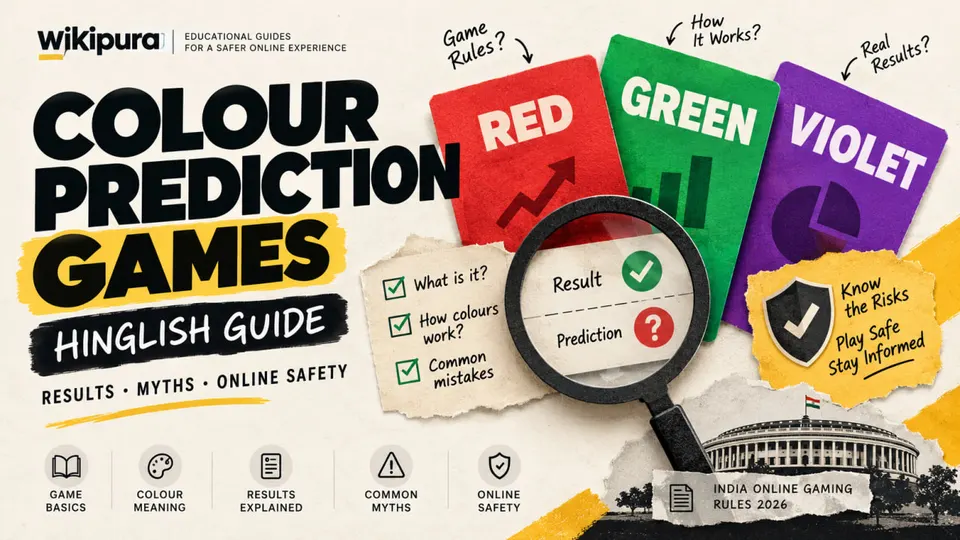
A colour trading game is a name often used for a short-round colour prediction format. The screen may offer three main colour choices—Red, Green and Violet—and may also show numbers from 0 to 9. Each completed round receives an outcome, and the interface may display that outcome in a result-history panel.
The word “trading” can be misleading. In this context, it generally refers to a prediction game, not buying and selling stocks, currencies or other financial assets. There is no stock-price chart behind a red or green result simply because the site uses the word trading.
Readers in India may search for the same general topic using “colour trading game”, “color prediction game”, “Wingo colour prediction” or a particular brand name. The spellings and brand terms can differ, but the important task is to understand the actual rules shown on the screen.
How Does a Colour Trading Round Work?
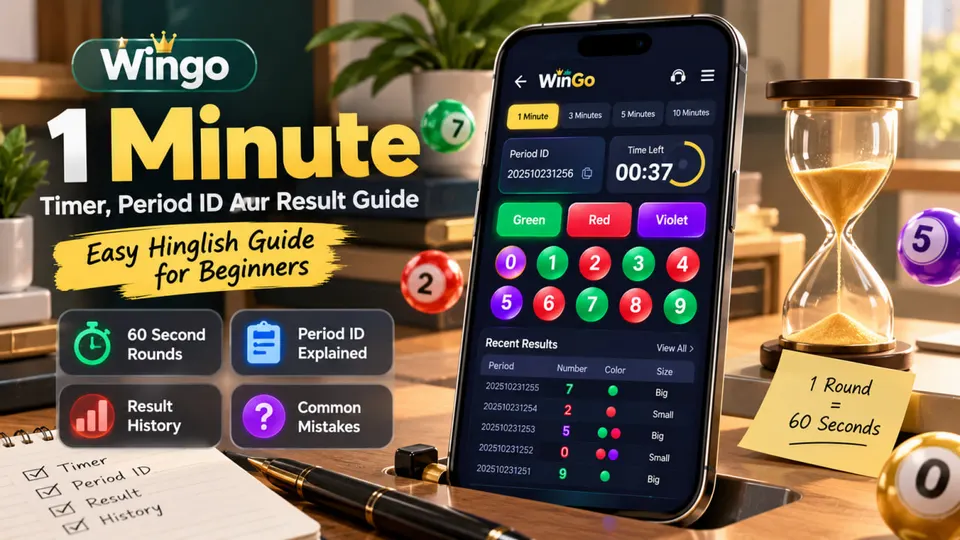
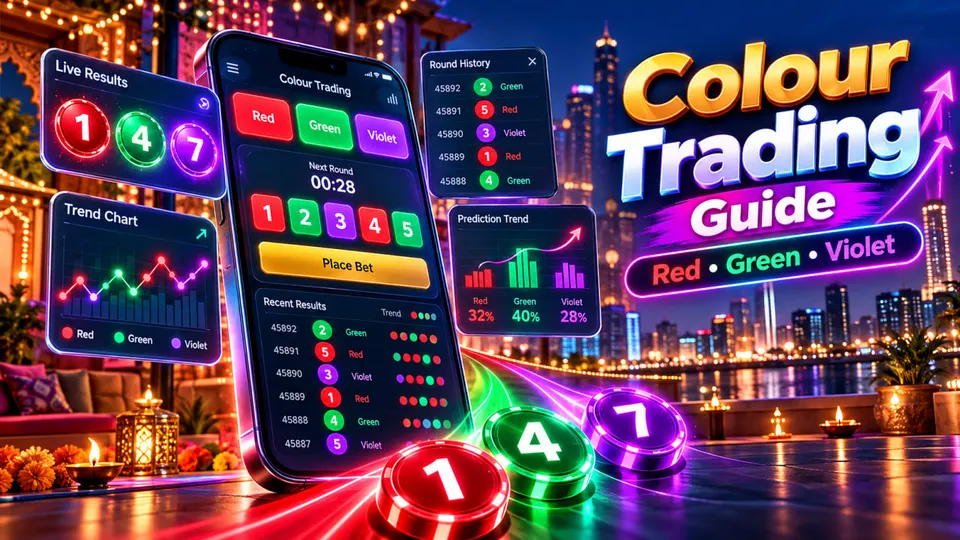
A common colour prediction interface has five parts:
- Round or period ID: A code that identifies one particular round.
- Countdown: A timer displaying how long the current round has remaining.
- Colour or number options: Labels such as Red, Green, Violet, or digits 0–9.
- Completed result: The number or colour shown after the round has finished.
- Result history: A list of earlier completed rounds.
Some versions also offer a Big/Small classification and an area where participants make a prediction before the round closes. Whether those features are present, and exactly how they operate, depends on the game version.
The key distinction is timing. A choice made before a round ends is a prediction. An outcome displayed after the round ends is a result. The two should never be described as the same thing.
Jai Club Colour Prediction: What Does the Term Mean?
“Jai Club Colour Prediction” is a search phrase associated with colour-and-number prediction screens described by third-party Jai Club-related websites. These descriptions commonly mention a WinGo-style interface with Red, Green and Violet options, period-based rounds and a result history.
Someone searching for “Jai Club colour trading game” may be trying to understand the coloured number buttons, the short timer or the difference between a period number and the winning result. Those questions can be answered by looking at the interface mechanics without assuming that every site using the Jai Club name has identical features.
For example, a screen showing “Period A207” and “Result 3” contains two different pieces of information. A207 identifies the round; 3 is the displayed result digit. Under a common WinGo number chart, 3 belongs to Green and Small. That mapping should still be checked against the exact version's published rules.
There are multiple sites using similar Jai Club branding online, so this article does not designate any particular domain as the verified official operator.
Jalwa Game Colour Trading: How Is It Described?
“Jalwa Game Colour Trading” is another search phrase used in India for short-round colour prediction content. Online descriptions of Jalwa Game mention colour selections such as Red, Green and Violet and timed results, but the exact rules, interface and available modes cannot be assumed to match every Jai Club or WinGo variant.
The practical way to read a Jalwa-style colour trading screen is to separate the round identifier, the countdown and the completed outcome. If it displays a number alongside a colour, look for the game-specific explanation that links those values.
Do not borrow a number-colour chart from a different brand without checking that the Jalwa version uses the same mapping. Matching visual designs are not proof of identical rules, result generation or payout arrangements.
For a related explanation, see Wikipura's Jalwa Colour Trading beginner guide.
Jai Club vs Jalwa Game: What Should Readers Compare?
Instead of assuming one brand is simply a copy of the other, compare the information visible in the relevant game screens.
Game labels: Does the interface call the format Wingo, Colour Prediction, Colour Trading or something else?
Available round durations: Does it show one-minute rounds, three-minute rounds or other lengths? These options may change between versions.
Number mapping: Are 0 and 5 displayed as special Violet-associated results? Is the mapping clearly explained in the game rules?
Result-history format: Is the newest period at the top? Does each row show a number, a colour, a size label or a combination?
Status of the result: Is the round marked completed, or is the screen still showing a countdown or pending update?
This comparison is more useful than assuming both brands have the same exact buttons, timers or reward rules. It also helps explain why screenshots from two websites can look similar while showing different period IDs and histories.
Red, Green and Violet: How the Common Colour Chart Works
A widely described WinGo-style format uses one result digit from 0 to 9. The colour classification often follows this pattern:
- Green: 1, 3, 7 and 9.
- Red: 2, 4, 6 and 8.
- 0: Red + Violet in a commonly used mixed-colour chart.
- 5: Green + Violet in that mixed-colour chart.
Some simplified guides show 0 and 5 only under Violet. That shorthand does not explain all the special-result labels used in mixed-colour versions.
For example, a result of 8 would be classified as Red under the common mapping. A result of 1 would be Green. A result of 0 needs extra attention because the game may display both Red and Violet or use a different special-result presentation.
Important: This is a reference chart for a common format, not a verified universal rule for every Jai Club and Jalwa Game website. Always check the specific rules shown for the format being discussed.
You can read more in Wikipura's Wingo Colour and Number Chart guide.
What Do Big and Small Mean in Colour Trading?
A common 0–9 WinGo-style format groups result digits into two size categories:
- Small: 0, 1, 2, 3 and 4.
- Big: 5, 6, 7, 8 and 9.
Colour and size describe different aspects of the same result. For instance, the number 2 is Red and Small in the common chart. The number 7 is Green and Big. The number 5 is Big and may also have a Green + Violet label.
A size label is not a second independently drawn result. In formats based on the same digit, both labels are derived from that one digit.
For a more detailed explanation, visit Wingo Big Small Explained.
How to Read Colour Trading Results: Three Simple Examples
Consider the fictional result-history examples below. They do not come from Jai Club or Jalwa Game servers.
Example 1 — Period DEMO101; Result 7
The completed outcome is 7. Under the common chart, 7 is Green and Big. DEMO101 is only the identifier of that round.
Example 2 — Period DEMO102; Result 0
The completed outcome is 0. It is Small and is associated with Red + Violet under a common mixed-colour chart. A simplified version might display Violet differently, so check the specific rules.
Example 3 — Period DEMO103; Result 5
The completed outcome is 5. It is Big and is associated with Green + Violet in the mixed-colour format.
These examples show why it is useful to read the result digit first, then match the colour and size. Reading a screenshot without its period number or game mode can create confusion.
What Is a Period ID in Jai Club and Jalwa Game?
A period ID is the label for a particular round. It can contain several digits, a date-like sequence or another platform-defined format. It does not automatically encode the next colour.
If a screenshot shows a long code ending in 8, that does not mean the final result is 8. The code may be an identifier, while the completed outcome appears in a separate field.
When comparing two screenshots, check whether they refer to the same period, the same game type and the same round duration. A one-minute history row should not be matched to an unrelated three-minute round.
A useful rule is to write down the mode, period ID, result digit and colour label together, rather than sharing one cropped number.
One-Minute vs Three-Minute Colour Trading Rounds
Short timers are a defining feature of many colour prediction interfaces. One-minute and three-minute modes are commonly mentioned in online descriptions, and some versions may offer other durations.
A one-minute round has a nominal duration of 60 seconds. A three-minute round has a nominal duration of 180 seconds. This only describes how the rounds are labelled; it does not tell you when an updated result will arrive on every device.
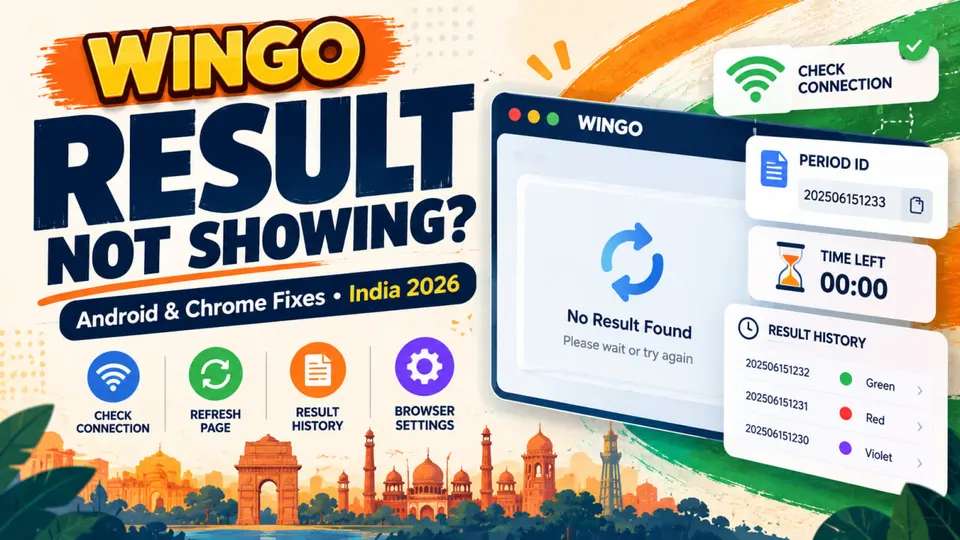
A timer reaching zero and a completed result appearing on the page can be separate events. Network delay, server response or browser refresh behaviour may affect what a user sees.
If a result seems missing, first confirm that the right duration tab is selected, then look for a new completed period in the history list. Do not treat the previous result as the new one merely because the timer restarted.
What Does Colour Trading Result History Tell You?
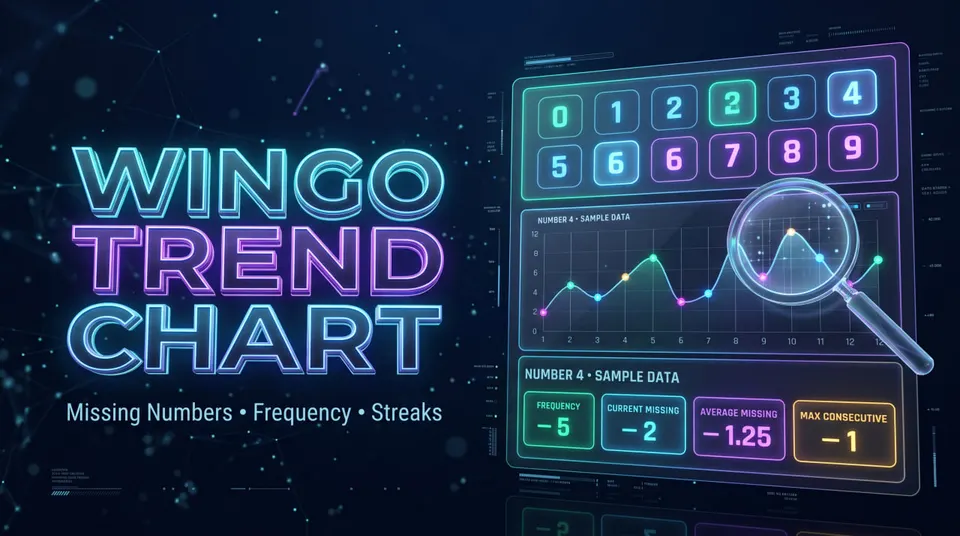
Result history shows previous rounds as recorded by a particular interface. It can help readers understand the order of completed periods, the displayed number and the associated colour.
Imagine the following fictional sequence: Green, Red, Red, Violet, Green. It tells you what those sample rows display. It does not tell you with certainty which colour will appear next.
This matters when people search for “Jai Club Colour Prediction today” or “Jalwa Game colour trading result history”. A page can explain past results or offer a live-looking chart without proving that it knows the next outcome.
A chart may contain long streaks of the same colour, alternating colours or repeated numbers. Those patterns are descriptions of past entries. Without independently verified evidence about a specific outcome generator, they are not a dependable forecast.
Can a Colour Trading Chart Predict the Next Result?
There is no reliable basis for claiming that a short colour-history chart guarantees the next result. In a genuinely independent random process, previous outcomes do not force the following colour to change or repeat.
For example, five consecutive Red results do not make Green “due” in the next round. Similarly, five Greens do not prove that another Green will follow. A pattern might look convincing after it happens, but that is different from demonstrating predictive accuracy before the outcome.
It is also important not to assume that every particular platform has independently verified random generation. The presence of a countdown or chart alone cannot establish fairness, predictability or authenticity.
Be cautious of claims involving “100% colour prediction”, “fixed result APK”, “VIP signal” or “secret Wingo formula”. Those claims require evidence, and a screenshot of successful predictions is not enough.
Why Do Some People Call It Trading Instead of Prediction?
Search engines and social media often use “colour trading” and “colour prediction” to describe similar game formats. Neither term by itself specifies how a particular website operates.
Traditional financial trading involves buying and selling assets. Colour prediction results are labelled game outcomes. A screen displaying Red, Green, Violet and a countdown should not be confused with a stock exchange or a financial market chart.
This difference also explains why the word “trend” on a game-history screen can be misleading. A streak chart may visualise recent game results, but it is not automatically a financial price trend or a tested prediction model.
For readers searching both “colour trading game in India” and “Jai Club Colour Prediction”, the useful questions are what the colours mean, how the result is recorded and which rules belong to the version they are reading about.
Common Mistakes When Reading Jai Club or Jalwa Results
Mixing up brands. A chart from a WinGo article may not exactly match the rules on a different Jalwa or Jai Club version.
Confusing a period ID with a result. The round code identifies the round; the outcome is listed separately.
Ignoring 0 and 5. These numbers can have special Violet-associated labels in common mixed-colour charts.
Comparing different timers. A one-minute history and a three-minute history may belong to different sequences.
Assuming pending means completed. A timer at 00:00 is not the same as a final result displayed for that period.
Treating a streak as a formula. Past colours cannot establish a guaranteed next outcome.
Trusting a cropped screenshot. Without a visible period, mode and source, a result image can lack essential context.
Quick Checklist for Understanding a Colour Trading Screen
Before interpreting a displayed result, ask five questions:
- Which format is being shown—Jai Club Colour Prediction, Jalwa Game Colour Trading or another WinGo-style version?
- Which duration or game mode is selected?
- What is the completed period ID?
- What result digit or final colour is shown for that period?
- Does the game's published colour chart match the classification being used?
Answering those questions will usually make a confusing screenshot easier to understand. The goal is to read the information accurately, not to promise what the next result will be.
Frequently Asked Questions
What is a colour trading game in India?
It is a term commonly used for short-round colour prediction games with outcomes such as Red, Green and Violet. Some versions also show numbers and Big/Small classifications. Exact rules vary by game.
What is Jai Club Colour Prediction?
It is a search term associated with WinGo-style colour and number prediction content using Jai Club branding. Specific website features and operator identity should not be assumed from the name alone.
What is Jalwa Game Colour Trading?
It is a term used for colour prediction formats associated with Jalwa Game. Online descriptions mention timed colour-result rounds, but a specific version's rules should be checked directly.
Are Jai Club and Jalwa Game colour trading rules identical?
Not necessarily. The two names may appear alongside similar colour prediction mechanics, but available timers, result displays and special-number rules should be checked for each version.
What do Red, Green and Violet mean?
In a common WinGo-style chart, 1, 3, 7 and 9 are Green; 2, 4, 6 and 8 are Red; and 0 and 5 have special Violet-associated results. Exact labels can vary.
What is the difference between colour prediction and colour trading?
The phrases are often used for similar game formats. “Colour trading” does not make the game the same as financial trading in stocks or currencies.
What does Big or Small mean?
Under a common 0–9 format, Small covers 0–4 and Big covers 5–9. Both classifications are based on the result digit.
Does a one-minute round always show its result immediately?
Not necessarily. A countdown can finish before the page displays the completed result, especially when data or the browser interface updates late.
Can Jai Club Colour Prediction history tell the next colour?
A result history records previous outcomes. It does not by itself provide a reliable forecast of future colours.
Can a Jalwa Game screenshot prove a colour prediction was accurate?
A screenshot may show a result, but a cropped or unverified image does not establish advance knowledge. The period, timing and authenticity of the record all matter.
Final Thoughts
Colour trading game searches in India often bring together Jai Club Colour Prediction, Jalwa Game Colour Trading and WinGo-style result charts. These names may share familiar elements: a timer, a period ID, numbers, Red/Green/Violet labels and completed result history.
The most useful way to understand any of these interfaces is to separate a prediction from a completed result, check the game's actual colour chart and avoid treating past patterns as guaranteed information about the future.
Wikipura explains game terminology and interfaces independently. It does not publish verified live result feeds or claim to predict an upcoming colour or number.