How to Play Wingo Game in India: Beginner Guide 2026
Learn how to play Wingo game formats in India, understand the 0–9 number system, Red, Green and Violet results, round timers, and important safety rules.

In this article
- How to Play Wingo Game: Understand the Basic Format
- Step 1: Identify the Parts of a Wingo Screen
- Step 2: Learn the Wingo Numbers from 0 to 9
- Step 3: Understand Red, Green and Violet
- Step 4: Know the Difference Between Big and Small
- Step 5: Follow a Round from Timer to Result
- Step 6: Read a Wingo Result Correctly
- Step 7: Understand the Results History Section
- Step 8: Avoid Common Beginner Mistakes
- How to Play Wingo Game Safely as an Information-Seeking Beginner
- Is Wingo Money Gaming Legal in India in 2026?
- Frequently Asked Questions About Wingo
- How to play Wingo game for beginners?
- Is WinGo the same as Bingo or Tambola?
- What colours are used in the Wingo game?
- Which Wingo numbers are Red?
- Which Wingo numbers are Green?
- What do Big and Small mean in Wingo?
- Can previous results tell me the next winning colour?
- Is every Wingo website or APK safe to use?
- Is real-money Wingo legal in India in 2026?
- Final Thoughts
How to play Wingo game formats? The first step is to understand the screen: a WinGo-style round normally displays a countdown timer, a period number, and a result from 0 to 9.
That result is also described using Red, Green or Violet and a Big or Small label. This guide explains how the format works for readers in India without assuming that any particular app is safe, licensed or legally available.
WinGo should not be confused with Bingo or Tambola. A typical WinGo-style colour prediction screen does not involve a paper ticket with 90 numbers, marking rows or calling out a full house. The explanations below are educational examples of a common interface, not instructions to place real-money wagers.
How to Play Wingo Game: Understand the Basic Format
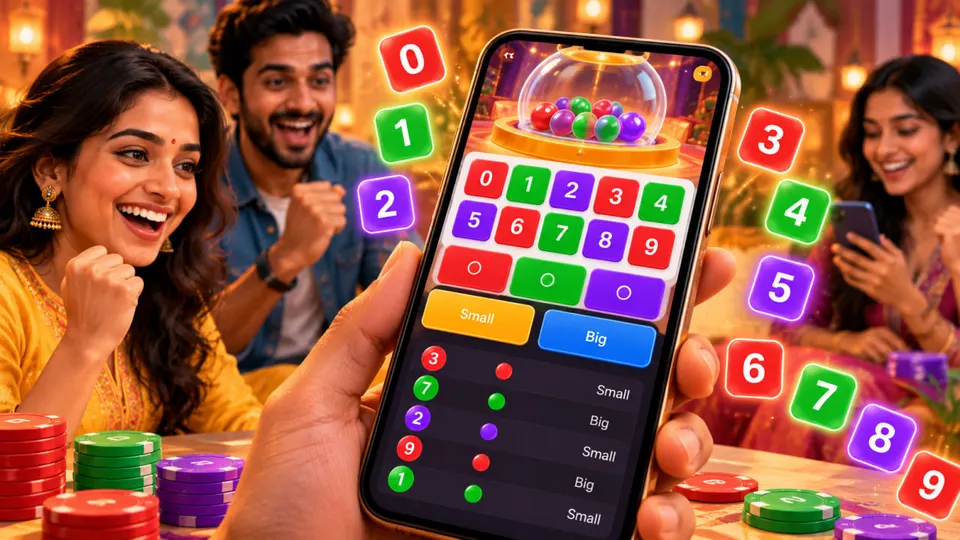
A WinGo-style game revolves around short, numbered rounds. A round has a period identifier, a countdown and a result. The displayed outcome is usually a single digit between 0 and 9. The game's colour and size labels come from that same digit.
You may encounter buttons labelled Red, Green, Violet, Big, Small and the digits 0 through 9. Those buttons represent possible outcome categories. They do not mean that a player can influence the number generated for the next round.
The exact interface, round duration and available options can differ between websites. Use the rules displayed by the specific version you are studying rather than treating every third-party screenshot as an official guide.
Step 1: Identify the Parts of a Wingo Screen
Before interpreting any result, learn what the common screen elements mean.
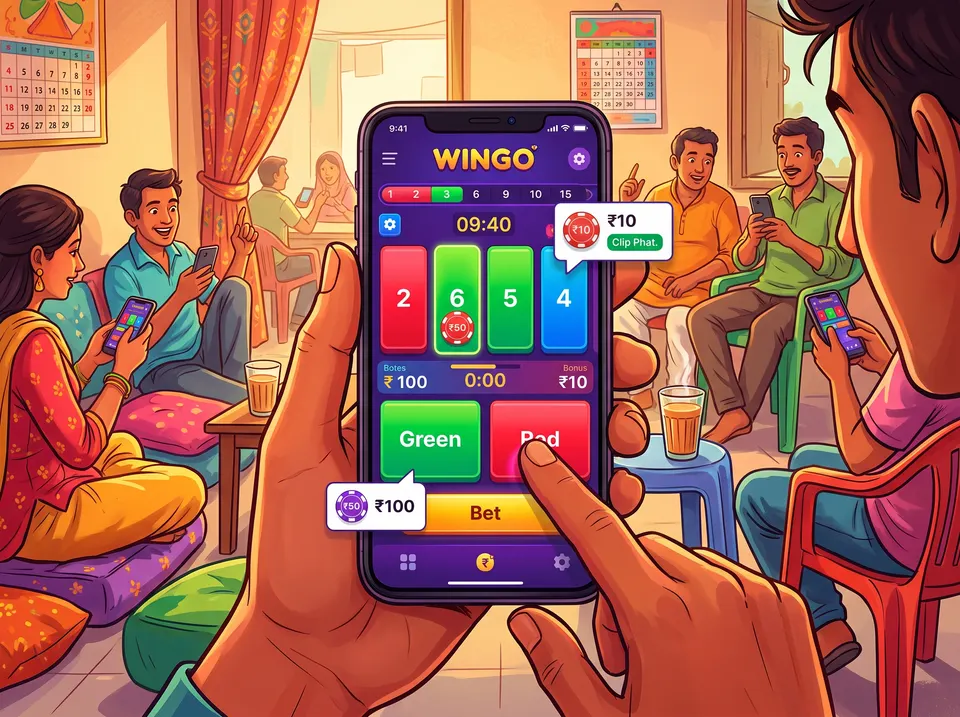
- Period or round ID: A reference number identifying one round. It helps distinguish one result from another.
- Countdown timer: Shows how much time remains in the current round. Different versions may use different intervals.
- Number options: Digits from 0 to 9, usually arranged in a row or grid.
- Colour labels: Red, Green and Violet categories associated with those digits.
- Big and Small: Two labels that divide the ten digits into separate number ranges.
- Result history: A record of completed rounds, often including the period ID, digit and colour.
For beginners, the most useful habit is reading the period ID and final digit before looking at other labels. That prevents confusion when an interface uses several coloured indicators at once.
Step 2: Learn the Wingo Numbers from 0 to 9
In a commonly used WinGo-style system, the result digit determines the colour and size category. The reference below is written as a list so it can be copied cleanly into a mobile-friendly article without a table.
- 0 — Red + Violet — Small
- 1 — Green — Small
- 2 — Red — Small
- 3 — Green — Small
- 4 — Red — Small
- 5 — Green + Violet — Big
- 6 — Red — Big
- 7 — Green — Big
- 8 — Red — Big
- 9 — Green — Big
This is a widely seen mapping, not a claim that all operators use identical settlement rules. If the platform shows a different chart, its published rules should be checked before drawing conclusions.
Notice two details. First, the number 0 is not Green; it normally appears as Red and Violet together. Second, the number 5 is commonly shown as Green and Violet. These two digits are the main reason the chart can look confusing at first.
For a detailed digit-by-digit explanation, see the Wingo Colour and Number Chart Guide.
Step 3: Understand Red, Green and Violet
The colours in WinGo-style screens are result categories. They are not symbols of luck, personality or positive and negative energy.
Red commonly describes 2, 4, 6 and 8, with 0 appearing as a Red-and-Violet result. Green commonly describes 1, 3, 7 and 9, with 5 appearing as a Green-and-Violet result. Violet is associated with the special digits 0 and 5.
Suppose a completed round displays 6. The digit is 6, its colour label is Red, and its size label is Big. If another round displays 5, the chart may show Green and Violet together, and the size label is Big.
These labels describe a completed result. They do not tell readers which colour is likely to appear next. To explore the special colour overlaps further, see Wingo Colour Chart: Red, Green and Violet Explained.
Step 4: Know the Difference Between Big and Small
The size grouping is separate from the colour grouping but comes from the same number.
Small: 0, 1, 2, 3 and 4.
Big: 5, 6, 7, 8 and 9.
For example, number 4 is Red and Small, while number 7 is Green and Big. Number 0 is Red + Violet and Small, while number 5 is Green + Violet and Big.
The labels do not refer to the size of a prize or the importance of a round. They simply describe the range containing the result digit. The number 5 belongs to Big, not Small, in the commonly used format.
Step 5: Follow a Round from Timer to Result
To understand the sequence, imagine that you are looking at a demonstration screen rather than making a real-money transaction.
Before the timer ends: The screen displays an active period ID and a remaining countdown. The colours, numbers and size categories may be visible as interface options.
When the period closes: The current round ends. Some interfaces briefly display a loading or transition state while the result is prepared.
After the result appears: One digit from 0 to 9 is shown. The interface may also display its colour and Big or Small classification.
When the next round begins: A new period ID and countdown appear. The previous result may move into the history section.
The important point is that a period ID belongs to a particular round. If you compare the wrong ID with a screenshot from a different round, you can mistakenly conclude that the recorded result is inconsistent.
Step 6: Read a Wingo Result Correctly
Here are four fictional examples created only to explain the format. They are not actual historical results or live game data.
Example A: An illustrative round shows number 2. Read it as 2, Red, Small.
Example B: Another round shows number 9. Read it as 9, Green, Big.
Example C: A round ends with 0. Read it as 0, Red + Violet, Small.
Example D: A round ends with 5. Read it as 5, Green + Violet, Big.
Always begin with the digit. Then check the colour mapping and finally the size category. This three-part check is more reliable than guessing what a small coloured dot means on its own.
If the screenshot shows both Green and Violet for number 5, that is one digit with two colour labels, not two separate draws.
Step 7: Understand the Results History Section
A results history records completed periods. Depending on the interface, it may show the latest numbers first, a series of colour circles, Big or Small labels, and the corresponding period IDs.
A useful way to read this section is to check whether each row includes the expected three details: the period, the digit and the matching colour. If an entry appears inconsistent, verify that you are looking at the same game mode and the same completed period.
However, history is a record, not a forecast. If Green appeared four times in a row, that does not establish that Red must appear next. If number 0 has not appeared recently, the chart alone cannot tell you that it is due.
Results history can help someone understand the display and spot a transcription mistake. It cannot prove that an independent future outcome has become predictable.
Step 8: Avoid Common Beginner Mistakes
Mistake 1: Confusing WinGo with Bingo. Bingo and Tambola often use numbered cards, lines and full-house patterns. WinGo-style colour prediction commonly uses a single digit from 0 to 9 per round.
Mistake 2: Treating Violet as an independent number. Violet is a colour label associated with 0 and 5 in the common mapping, not a separate eleventh digit.
Mistake 3: Assuming 5 belongs to Small. In this format, Small ends at 4. Big starts at 5.
Mistake 4: Following a screenshot without checking the period ID. Two screenshots can display different results simply because they refer to different rounds.
Mistake 5: Believing a streak predicts the next colour. Recent results may form visible patterns by chance. A pattern seen afterward is not proof of a reliable forecasting method.
Mistake 6: Trusting an unfamiliar app or download link. A familiar game name, a polished interface or an HTTPS address does not by itself prove that a platform is authentic, secure or legally permitted.
How to Play Wingo Game Safely as an Information-Seeking Beginner
For readers in India, understanding the display is different from participating in a real-money game. You can learn the number mapping and read sample result screens without downloading unknown APK files, sharing personal documents or sending money.
Be cautious of anyone promising a guaranteed number, a secret colour sequence or a fixed return. Never share an OTP, password, banking PIN or payment credentials to obtain a prediction. Avoid installing files from links sent through unsolicited messages.
If you are evaluating an app, check who publishes it, what permissions it requests, and whether it has a verifiable source. A game-themed interface can be imitated, and a download advertised as an official application is not necessarily genuine.
This article does not verify or endorse any specific WinGo operator. For the separate general introduction, read What Is Wingo Game?.
Is Wingo Money Gaming Legal in India in 2026?
India's legal position changed significantly in 2026. The Promotion and Regulation of Online Gaming Act, 2025 and the Online Gaming Rules, 2026 took effect on 1 May 2026. The national framework prohibits online money games within its legal definition, whether described as chance-based or skill-based, while providing a separate framework for permitted online social games and e-sports.
That means the existence of a website or mobile app should not be interpreted as evidence that a real-money version is lawful in India. A colour-prediction format involving monetary stakes raises legal concerns that must be assessed under current law.
For an official explanation, see the Government of India press note on the Online Gaming Rules, 2026 and the Ministry of Electronics and Information Technology's Act and rules page.
This is general information, not legal advice or a recommendation to participate in money gaming.
Frequently Asked Questions About Wingo
How to play Wingo game for beginners?
Begin by understanding a sample screen. Identify the period ID, countdown and final digit from 0 to 9. Then use the colour and Big or Small mapping to interpret a completed result. This guide does not provide real-money participation instructions.
Is WinGo the same as Bingo or Tambola?
No. The WinGo-style colour prediction format discussed here uses one digit from 0 to 9 per round. Bingo or Tambola typically involves marking numbers on cards and completing patterns.
What colours are used in the Wingo game?
Common WinGo-style charts use Red, Green and Violet. The exact interface and rules may differ between platforms.
Which Wingo numbers are Red?
Numbers 2, 4, 6 and 8 are commonly Red. The special digit 0 may be shown as Red and Violet together.
Which Wingo numbers are Green?
Numbers 1, 3, 7 and 9 are commonly Green. The special digit 5 may be shown as Green and Violet together.
What do Big and Small mean in Wingo?
Small covers 0 through 4, while Big covers 5 through 9 in the common 0–9 mapping. The terms classify the result digit.
Can previous results tell me the next winning colour?
No reliable next-round prediction follows from the chart or from a streak of past results. Historical data documents completed rounds; it does not guarantee future outcomes.
Is every Wingo website or APK safe to use?
No. Safety, authenticity and legal status must be verified separately. Do not assume an app is trustworthy merely because it uses familiar branding or appears in a search result.
Is real-money Wingo legal in India in 2026?
India's 2026 framework prohibits online money games that meet the law's definition. Educational explanations of game mechanics are different from offering or participating in prohibited real-money services. Consult official government sources for current details.
Final Thoughts
The easiest way to understand how to play Wingo game formats is to learn what the screen shows rather than memorise supposed winning tricks. A common round has a countdown, a period ID and one result digit from 0 to 9. That digit determines Red, Green or Violet and Big or Small labels. Once those parts are clear, a beginner can read a results screen without confusing WinGo with Bingo, misreading 0 and 5 or treating past patterns as promises about the future.
For readers in India, always separate an educational chart explanation from real-money gaming claims and check current safety and legal guidance before trusting an unfamiliar platform.