Wingo SMS App Explained: How It Worked and India's Warning
What is the Wingo SMS app in India? Explore its SMS task earning claims, the January 2026 government action, reported fraud risks, Android security concerns and how it differs from the WinGo colour trading game.
In this article
- What Is the Wingo SMS App?
- Wingo SMS App: Key Facts
- Why Did Wingo SMS Become News in India?
- What Happened on 30 January 2026?
- What Did the Indian Cyber Crime Coordination Centre Say?
- How Did the Wingo SMS Earning Model Reportedly Work?
- What Does an SMS Task Mean?
- Why Would an App Want Access to SMS Permissions?
- What Is a Telecom Mule?
- How Many SMS Messages Were Reportedly Sent?
- What Kinds of Fraudulent Messages Were Reported?
- Why Is Using an Ordinary Mobile Number a Problem?
- Is Wingo SMS the Same as the WinGo Game?
- Is Wingo SMS the Same as Wingo SMS Login or OTP?
- Was the Wingo SMS App Banned in India?
- Is Wingo SMS Available on Google Play?
- Is a Wingo SMS APK Safe to Install?
- What if Wingo SMS Is Already Installed on an Android Phone?
- How Can Someone Check for Suspicious SMS Activity?
- Could SMS Tasks Create Charges or Account Problems?
- Where Can People in India Report Suspected SMS Fraud?
- What About Telegram Groups Promoting Wingo?
- What Does This Case Tell Us About Earning Apps?
- Why the Name Wingo Causes Confusion in Search Results
- Frequently Asked Questions About the Wingo SMS App
- What is the Wingo SMS app?
- Why is Wingo SMS being discussed in India?
- Who issued the Wingo warning?
- What does Wingo SMS task mean?
- Is Wingo SMS a colour prediction game?
- Did the government block Wingo?
- When did the government action happen?
- Why was the app considered risky?
- How many messages could the app send?
- What is a telecom mule?
- Was Wingo SMS available on Google Play?
- Is there a safe Wingo SMS APK download?
- Is Wingo SMS login the same thing?
- Does every app called Wingo belong to the same company?
- What if Wingo SMS is already installed?
- Could the app misuse a personal mobile number?
- Can an SMS scam affect someone who never installed Wingo?
- How can SMS fraud be reported in India?
- Is Wingo SMS still working in October 2026?
- Does Wikipura offer the Wingo SMS application?
- Final Thoughts
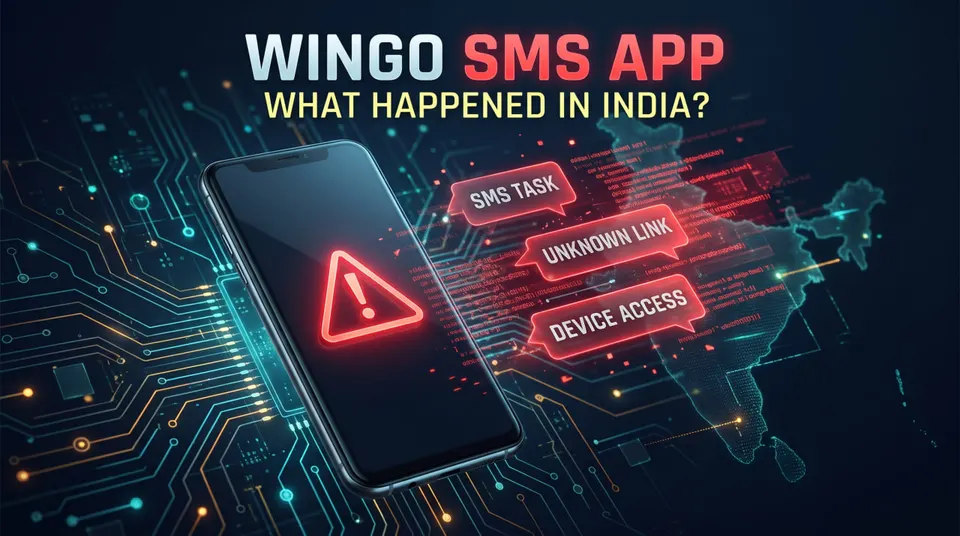
The Wingo SMS app became a topic of concern in India after cybercrime authorities warned that it was allegedly using Android phones to distribute fraudulent text messages.
The application was promoted as a way to earn money by completing SMS-based tasks. However, investigators said some users were unknowingly allowing their phone numbers and mobile connections to be used in a much larger messaging operation.
On 30 January 2026, Indian authorities reported action against the Wingo network, including geo-blocking its command-and-control infrastructure and disrupting associated promotional channels.
The incident also created confusion because the name Wingo resembles WinGo, a name commonly associated with colour prediction and number-based games.
This article explains what the Wingo SMS app was, how its reported earning model operated, what Indian authorities announced, why SMS permissions matter and whether it has any confirmed connection to WinGo games.
What Is the Wingo SMS App?
The Wingo SMS app was an Android application promoted through an earning model based on SMS tasks.
Its promotional material suggested that people could earn money by participating in message-related activities.
Unlike a conventional mobile game, the reported operation depended on access to users' phone and messaging capabilities.
The Indian Cyber Crime Coordination Centre, or I4C, described the reported operation as a "Telecom Mule as a Service" platform.
This description is significant.
Rather than simply offering an activity inside the app, the service was accused of using ordinary subscribers' mobile numbers to send messages on behalf of another network.
Authorities said that some of these messages contained deceptive content or links associated with cyber fraud.
The Wingo SMS case therefore concerns the reported misuse of telecommunications resources, not the rules of a colour prediction game.
Wingo SMS App: Key Facts
Here are the essential details reported by Indian authorities and news organisations.
App name reported: Wingo
Common search terms: Wingo SMS app, Wingo earning app, Wingo SMS task app
Device focus: Android phones
Promotional concept: Earnings through SMS-based tasks
Reported concern: Sending fraudulent SMS messages from users' mobile numbers
Authority issuing the warning: Indian Cyber Crime Coordination Centre (I4C)
Government department: Ministry of Home Affairs, India
Major reported action: 30 January 2026
Infrastructure action: Geo-blocking of command-and-control servers linked to the operation
Additional action: Blocking of associated Telegram channels and promotional YouTube videos
Public recommendation: Avoid using the flagged application and report suspected cyber fraud through official channels.
These details refer to the Wingo application identified in the January 2026 investigation.
They should not automatically be applied to every website, mobile app or game using a similar name.
Why Did Wingo SMS Become News in India?
Wingo attracted attention because the app's advertised earning activities allegedly concealed a different use of the phone.
Users were drawn towards a task-based earning opportunity.
After installing the application, they could be asked to grant access to SMS-related functions.
Investigators reported that the app then used participating devices to send messages to other people.
The concern was not merely that messages were being sent.
It was that the messages could carry fraudulent links or impersonate legitimate services, while appearing to originate from ordinary Indian mobile numbers.
This could make suspicious messages harder for recipients to recognise.
The case became a national news story when the Ministry of Home Affairs and I4C announced action against the associated infrastructure.
What Happened on 30 January 2026?
On 30 January 2026, Indian news agencies reported that the government had disrupted infrastructure linked to Wingo following complaints about fraudulent SMS activity.
According to the reports, the Ministry of Home Affairs acted through the Indian Cyber Crime Coordination Centre.
The authorities geo-blocked the network's command-and-control servers.
These servers were described as part of the system used to coordinate the operation.
Officials also reported action against four Telegram channels connected with Wingo promotions.
Those channels reportedly had a combined audience of approximately 1.53 lakh, or 153,000 subscribers.
More than 50 promotional YouTube videos were also targeted, with several reports citing over 53 videos.
The figure of 153,000 relates to the reported Telegram-channel audience. It should not be presented as the number of verified Wingo app users or confirmed victims.
The action was intended to disrupt the reported SMS fraud network.
It does not establish that every website or file using the Wingo name was removed permanently.
What Did the Indian Cyber Crime Coordination Centre Say?
I4C issued a public warning about Wingo and its SMS-based earning activity.
The agency described the application as part of a telecom-mule model and advised citizens to refrain from using it.
Its CyberDost awareness channel also explained that phones were allegedly being used to send fraudulent messages without users fully understanding what was happening.
The agency warned people to be cautious of unfamiliar Android applications advertised through promises of easy income.
A central message of the advisory was that an apparently ordinary mobile phone can become a tool for distributing fraudulent communications when an untrusted app receives sensitive permissions.
Readers can review the public warning through the I4C CyberDost advisory.
The government's warning concerns the application identified in the investigation. Similar names alone are not evidence that a different product is involved in the same operation.
How Did the Wingo SMS Earning Model Reportedly Work?
Reports from Indian investigators described a pattern involving task-based earning offers.
The reported sequence began with online promotions.
People were offered an opportunity to earn money through simple phone-based activities.
These promotions circulated through channels including Telegram and YouTube.
Users who followed the promotions were directed towards the Wingo application.
The application then assigned SMS-related tasks or obtained permissions relevant to sending messages.
Investigators alleged that participating devices were subsequently used to distribute messages beyond what users clearly understood they had agreed to.
Some police reports described initial small payments or quick withdrawals as a method of building trust.
The alleged operational problem was that a person's actual phone number could be used as the sender of messages serving a separate network.
This account describes allegations reported during the investigation. It is not a verified reconstruction of every installation or every individual's experience.
What Does an SMS Task Mean?
An SMS task is an activity involving text messages sent through a mobile network.
In a legitimate context, a messaging-related task could involve testing a properly authorised communication system.
However, the phrase itself does not establish that a particular app is trustworthy.
In the Wingo investigation, authorities said that the SMS-task model was being used to access ordinary mobile subscribers' messaging capabilities.
A person might see an activity described as sending a message, earning a reward or completing a daily task.
But the real question is who controls the message, who receives it, what it contains and whether the phone owner understands and authorises the communication.
An app that cannot clearly answer those questions should not be given broad messaging access.
Why Would an App Want Access to SMS Permissions?
On Android, SMS-related permissions can provide access to sensitive messaging functions.
Depending on the permission and operating-system restrictions, an app may be able to send messages, read messages or interact with messaging information.
These capabilities are not necessary for every type of application.
A calculator, wallpaper app or simple information guide generally has no obvious reason to send large numbers of SMS messages.
An unfamiliar earning app asking for such access therefore deserves close attention.
Giving an application permission can allow it to perform actions using the device, but users may not fully understand what those actions involve.
The risk is especially serious when the messages appear to come from the phone owner's real SIM number.
That number may be associated with personal contacts, service providers and other identifying records.
What Is a Telecom Mule?
A telecom mule is a person, device or telecommunications resource used to help another party carry out communications that may conceal the actual organiser.
In the Wingo case, the term described a reported system in which ordinary users' phone connections were allegedly used to send messages for a wider network.
Consider a simple example.
A scammer sends a suspicious message from a random foreign number.
The recipient may immediately recognise that the number looks unusual.
Now imagine a similar message appearing to come from an ordinary domestic mobile number.
The recipient may regard it as more familiar.
That difference illustrates why the misuse of genuine subscriber numbers is a concern.
The term "mule" does not mean every phone owner knowingly participated in fraud.
Authorities specifically reported that some users did not understand how their devices were being used.
How Many SMS Messages Were Reportedly Sent?
Reports from the investigation described devices allegedly sending approximately 80 to 100 SMS messages per day.
I4C's public awareness material also referred to around 100 automatic SMS messages in its explanation of the risk.
These numbers describe reported behaviour associated with the investigated operation.
They should not be interpreted as a fixed number sent by every installation, on every day or through every device.
Actual activity could depend on the version of the app, permissions, device settings and whether the associated infrastructure was still operating.
The important point is that a phone could reportedly distribute messages beyond the owner's ordinary personal use.
What Kinds of Fraudulent Messages Were Reported?
Authorities warned that messages associated with the operation could contain links related to several types of deception.
Examples cited in public reporting included fake traffic-fine notices, financial offers and other payment-related messages.
An e-challan is an electronic traffic penalty notice.
A fraudulent e-challan SMS may imitate a genuine notice to make the recipient open an unfamiliar payment link.
Messages can also impersonate a bank, delivery service or other familiar organisation.
The purpose of such messages may be to direct recipients towards phishing pages, unauthorised payments or malicious downloads.
Not every message containing a link is fraudulent.
The concern is the use of deceptive links, impersonation and unauthorised messaging infrastructure.
A sender name or familiar-looking number alone is not enough to establish whether a message is genuine.
Why Is Using an Ordinary Mobile Number a Problem?
A genuine subscriber number can make a suspicious message appear more believable than an unknown automated sender.
Recipients may associate domestic numbers with ordinary users.
This creates an opportunity for scammers to hide the origin of messages.
It can also create problems for the phone owner.
Recipients may respond angrily to the message.
A telecom provider may notice unusual outgoing SMS activity.
A person's number may appear in complaints even if they did not understand what an installed application was doing.
Some reports also raised concerns about misuse of digital identity and SIM-related information.
These possibilities illustrate the importance of limiting access to sensitive phone capabilities.
They do not mean every Wingo user was proven to have committed an offence.
Is Wingo SMS the Same as the WinGo Game?
No confirmed evidence establishes that the Wingo SMS application identified by Indian authorities is the same product as the WinGo colour prediction games commonly discussed online.
The names look similar, but their described functions are different.
The Wingo SMS case concerns an Android earning app and alleged SMS misuse.
WinGo colour prediction refers to a type of number-and-colour game interface.
Such games may display a countdown, period number, colour options and Big/Small results.
The SMS earning app does not need those gaming features to carry out its reported activities.
A search for "Wingo SMS" can therefore lead to information unrelated to WinGo game results.
This distinction matters when identifying search results, apps or news reports.
For a separate explanation of game terminology, readers can visit Wikipura's Wingo Game Rules category.
That section deals with game mechanics, not the SMS app investigated in January 2026.
Is Wingo SMS the Same as Wingo SMS Login or OTP?
Not necessarily.
The words "SMS login" may simply describe a service sending a one-time password, or OTP, to a user's phone during account verification.
This is different from an app asking to send SMS messages from the user's own SIM card.
There are three separate situations to recognise.
SMS task app: An application offers tasks involving outgoing SMS activity.
SMS OTP login: A service sends a verification code to a user.
WinGo colour game: A game uses number and colour outcomes.
These functions are not interchangeable.
The presence of the word Wingo in more than one search result does not establish a common company, developer or technical connection.
Was the Wingo SMS App Banned in India?
News reports published on 30 January 2026 described government action against the Wingo operation and frequently used the word "blocked".
The precise reported technical action was the geo-blocking of command-and-control servers associated with the network.
Authorities also blocked promotional Telegram channels and YouTube content.
This is more specific than saying that every copy of an Android application named Wingo disappeared from every phone.
A previously installed file can remain on a device after its remote infrastructure is disrupted.
Likewise, a new website using the same name does not establish that the previously reported operation has become legitimate.
The most accurate description is that Indian authorities disrupted the Wingo SMS-task network and advised users not to use the flagged application.
Is Wingo SMS Available on Google Play?
At the time of the January 2026 investigation, police reports stated that the Wingo application they were examining was not available through Google Play.
Its promotion reportedly depended heavily on external channels.
However, app-store listings can change, and unrelated apps can have similar names.
An item appearing in a search result or application marketplace is not by itself proof that it is the same product mentioned in the investigation.
Readers should not use an unfamiliar APK, Telegram attachment or mirror website in an attempt to access the flagged application.
The relevant security question is whether a particular app can be independently verified and whether its permissions and purpose are appropriate.
Is a Wingo SMS APK Safe to Install?
An APK is an Android application package.
The APK format itself is normal, but an unknown APK can contain unwanted or harmful functionality.
For an application specifically identified in a government cybercrime warning, installing another copy from an unofficial source is not a sensible way to investigate it.
The reported Wingo incident involved concerns about outgoing SMS activity and possible misuse of device resources.
There is no need to install the flagged application to understand the incident.
News reports, government advisories and independent security explanations provide a safer basis for research.
Readers should be especially cautious of downloads advertised as "Wingo SMS latest version", "Wingo earning APK" or "Wingo unblocked app" without verifiable developer information.
A different download link does not resolve the underlying concern.
What if Wingo SMS Is Already Installed on an Android Phone?
Anyone who believes they installed the application identified in the warning should review the situation carefully.
First, avoid opening the application again or giving it additional permissions.
If unexpected SMS activity is continuing, disconnect mobile data and Wi-Fi while preparing to remove the app.
Inspect the Android app list and locate the suspicious application.
Depending on the Android version, its permissions can be reviewed under Settings, Apps and Permissions.
Check whether the app has been allowed to access SMS, contacts, phone functions or other information unrelated to an ordinary earning activity.
Remove the suspicious application using Android's normal uninstall function.
Then update the device and run its built-in security checks or a reputable mobile security scan.
If there is evidence of unauthorised activity, preserve relevant screenshots, dates and messaging records before removing information needed for a complaint.
People who are unsure whether a device is compromised can seek help from a trusted mobile security professional.
How Can Someone Check for Suspicious SMS Activity?
One useful step is reviewing the phone's messaging application.
Look for outgoing messages that the device owner does not recognise.
However, an empty or ordinary-looking Sent folder does not conclusively prove that no unusual activity occurred.
Some applications may handle messaging in ways that are not immediately obvious in the default messaging interface.
A mobile-network provider may be able to help investigate unexpected SMS charges or usage, depending on the account and available records.
The device owner can also review which applications have SMS-related permissions.
If an app has no clear reason to send messages but has requested sensitive access, that is worth examining.
These checks can reveal warning signs.
They cannot by themselves reconstruct every message sent by a suspected malicious application.
Could SMS Tasks Create Charges or Account Problems?
Sending text messages through a mobile network can affect a subscriber's account depending on the tariff and service conditions.
If a device sends many messages unexpectedly, the user may notice unusual outgoing-SMS usage or charges.
There may also be concern if the mobile number becomes associated with suspicious communications.
The exact impact depends on the device, network plan and reported activity.
A subscriber who notices unexplained SMS usage should contact their telecom provider using a verified customer-support channel.
If financial information, passwords or other sensitive details were exposed, the affected accounts should also be reviewed.
Users should not share one-time passwords or banking credentials with someone claiming they can recover a Wingo earning balance.
Where Can People in India Report Suspected SMS Fraud?
People in India can report suspected cybercrime through the official National Cyber Crime Reporting Portal.
The portal is available at cybercrime.gov.in.
For urgent financial cyber fraud, authorities also publicise the national helpline number 1930.
When submitting a complaint, include accurate information such as the suspicious app name, relevant dates, messages and any known financial impact.
Avoid publishing private phone numbers, identity documents or banking details on public websites.
A formal report can help authorities identify patterns and investigate suspected misuse.
The reporting service is separate from the gaming websites and applications that happen to use Wingo-like names.
What About Telegram Groups Promoting Wingo?
Investigators reported that Telegram channels were used to promote the flagged application.
Some promotions allegedly promised convenient income from phone-based tasks.
The government subsequently reported blocking four associated Telegram channels.
This does not mean every Telegram group mentioning Wingo was involved in the same operation.
A gaming discussion channel and a channel distributing an SMS-task APK can serve very different purposes.
The relevant warning signs are the behaviour being requested, the download source and the app's access to sensitive device functions.
A group promising earnings in exchange for installing an unfamiliar application and enabling SMS permissions should be treated cautiously.
Follower counts, screenshots and claimed payout histories are not reliable proof that such an offer is safe.
What Does This Case Tell Us About Earning Apps?
The Wingo SMS incident highlights how an earning offer can be connected to a device-permission risk.
An application may appear to request a simple action.
But the real impact depends on what technical access the app receives and how that access is used.
The device owner may think they are completing a task.
Meanwhile, the installed software may be communicating with remote infrastructure.
The public investigation into Wingo described concerns about exactly this separation between what users thought they were doing and how their devices were allegedly being used.
For any unfamiliar earning app, the most important questions are who operates it, what permissions it requires and whether the user clearly understands the activity being performed.
A promise of small payments does not answer those questions.
Why the Name Wingo Causes Confusion in Search Results
The word Wingo appears in several unrelated online contexts.
One search result may describe a colour prediction game.
Another may refer to SMS-based login verification.
A third may discuss the Wingo application investigated by Indian cybercrime authorities.
These topics can overlap in Google results because they share similar names.
However, they should not be merged into one explanation.
The Wingo SMS case is primarily about an earning application and alleged telecommunications abuse.
WinGo games are discussed in terms of timers, numbers, colours and result history.
For example, Wikipura's Wingo Result Not Showing on Android guide discusses ordinary browser and game-result display issues.
That troubleshooting topic is not a technical explanation of the Wingo SMS-task network.
Distinguishing the two helps readers avoid applying the wrong advice to the wrong product.
Frequently Asked Questions About the Wingo SMS App
What is the Wingo SMS app?
Wingo was an Android application promoted through SMS-based earning tasks. Indian authorities warned that the application identified in their investigation was reportedly misusing phones to send fraudulent SMS messages.
Why is Wingo SMS being discussed in India?
The app became national news after Indian authorities announced action against the associated network on 30 January 2026.
Who issued the Wingo warning?
The Indian Cyber Crime Coordination Centre, operating under the Ministry of Home Affairs, issued the warning.
What does Wingo SMS task mean?
It refers to earning-related activities involving SMS messages. In the investigated Wingo operation, authorities alleged that the task model was used to misuse subscribers' messaging capabilities.
Is Wingo SMS a colour prediction game?
The application identified in the SMS-fraud investigation was described as an SMS-task earning app. No confirmed evidence establishes that it is the same product as a WinGo colour prediction game.
Did the government block Wingo?
Authorities reported geo-blocking command-and-control infrastructure associated with Wingo and taking action against promotional channels and videos.
When did the government action happen?
The major reported action took place on 30 January 2026.
Why was the app considered risky?
Authorities reported that it was associated with fraudulent SMS messages sent from users' Android phones without their clear understanding.
How many messages could the app send?
Investigators reported activity of approximately 80 to 100 messages per day on some devices. This is not a verified fixed rate for every user.
What is a telecom mule?
It is a telecommunications account, device or connection used to facilitate communications on behalf of another party, potentially concealing the organiser of the activity.
Was Wingo SMS available on Google Play?
Police reports during the January 2026 investigation said the identified application was not available on Google Play at that time.
Is there a safe Wingo SMS APK download?
This article does not recommend downloading the application identified in the government warning or installing unofficial replacements.
Is Wingo SMS login the same thing?
No. SMS login usually refers to receiving a verification code. It is different from an earning application requesting outgoing SMS access.
Does every app called Wingo belong to the same company?
No such connection should be assumed. Similar names are not sufficient evidence of shared ownership or technology.
What if Wingo SMS is already installed?
Review the app and its permissions, uninstall the suspicious software, check the device for unwanted activity and report any suspected fraud through official channels.
Could the app misuse a personal mobile number?
Indian investigators alleged that participating phones and subscriber numbers were used to distribute suspicious messages.
Can an SMS scam affect someone who never installed Wingo?
Yes. A person who receives and follows a fraudulent SMS link can still be targeted, regardless of whether they installed the sending application.
How can SMS fraud be reported in India?
Use the National Cyber Crime Reporting Portal at cybercrime.gov.in. For urgent financial cyber fraud, the official helpline is 1930.
Is Wingo SMS still working in October 2026?
The January 2026 government action against the reported infrastructure is documented. The available evidence does not establish the live status of every later website, APK or service using the Wingo name.
Does Wikipura offer the Wingo SMS application?
No. Wikipura provides independent information about the reported application and the distinction between SMS-task services and similarly named games.
Final Thoughts
The Wingo SMS app case is an example of how an online earning offer can raise serious questions about mobile-device permissions and the use of ordinary phone numbers.
Indian authorities reported that the application identified in their investigation was connected to fraudulent SMS activity.
On 30 January 2026, the government announced action against the network's infrastructure and promotional channels.
The case should not be confused with the separate topic of WinGo colour prediction games or ordinary SMS login verification.
For readers researching Wingo SMS in India, the most important facts are the reported SMS-task model, the official cybercrime warning, the action taken against the network and the steps available to anyone who suspects their phone was misused.
Understanding exactly which application is being discussed is more useful than relying on a shared name or an unfamiliar download link.
Editorial note: This independent article is based on the public January 2026 warning from Indian cybercrime authorities and subsequent news reporting. Allegations concerning the app's operation are attributed to investigators. The article does not assert that every product named Wingo is connected to the reported SMS-fraud network.